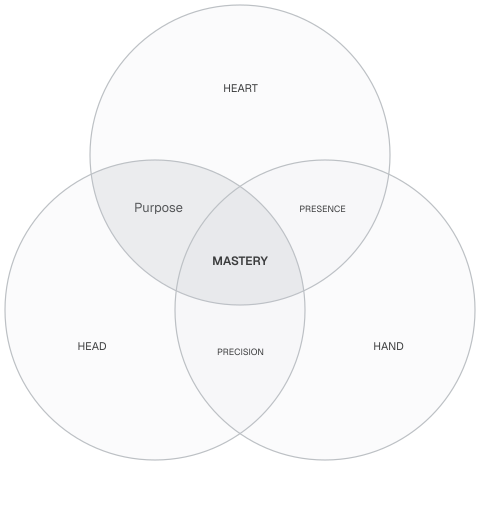
The stakeholder presentation is minutes away. The research found something the brief didn’t anticipate, and the screen now has to be true for the user and defensible to the business at once. Craft cannot settle that. You have to decide it, and defend it, in front of the room.
Hand, Head, and Heart are taught one at a time. They work together at the intersections, which have requirements of their own.
Purpose is the intersection where Heart meets Head, and it runs both ways. One way turns what research reveals about users into strategy the business can act on. The other tests what the business wants against what users actually need. Most designers reach for one and avoid the other. It took me a while to notice I was doing the same thing.
The mark of Purpose in practice is a recognisable kind of argument. It sounds like: this design move serves [specific user] in [specific situation] by [specific mechanism], and the business outcome it produces is [specific metric or strategic effect]. Both halves of the sentence are required. A designer who can produce only the first half is making a Heart argument. One who can produce only the second is making a Head argument. The argument that wins product decisions has both, and the practitioner who can construct it consistently is operating in Purpose.
Roger Martin’s framing of integrative thinking (4.1) applies directly here. The opposing models are not abstract: they are the user’s stated need and the business’s stated outcome, which routinely point in different directions. Integrative thinking at the practitioner level is the move that produces a third option neither side proposed but both can recognise as serving them.