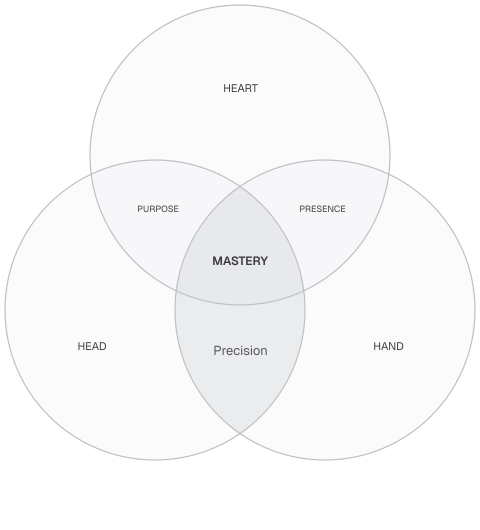
Precision is the intersection where Head meets Hand: the infrastructure that makes excellence repeatable across a team and across time. Purpose and Presence are about specific moments, the argument made in a particular meeting, the empty state shipped in a particular release. Precision is about the standard that holds across moments, across designers, and past the point where whoever set it has moved on.
The diagnostic question for Precision is: if you stopped doing this work tomorrow, what would survive? The answer reveals what has been encoded into infrastructure and what has been carried in your head. Most senior design work fails this test without the practitioner noticing. The reasoning that produced a good decision sits in the practitioner’s notes, in their memory, in conversations they had with one collaborator. None of it is structurally available to the next designer who will face the same kind of decision. Turning what was decided well once into what can be decided well again is the work of Precision.
Three sites carry most of the practical weight.
Design systems (3.5): the most visible site. Token architecture, component libraries, pattern documentation, governance. A design system is Precision encoded into reusable form, the standard about colour, spacing, type, and interaction made consistent across teams without each team having to rediscover it.
Decision archives: Less commonly built and often more valuable: written records of design decisions and the reasoning behind them, kept in a place the next designer can find. Writing down why a decision was made the way it was lets the next person facing a similar situation avoid relitigating the same trade-offs from scratch.
Critique rituals (4.5): the structured conversations that audit work against the team’s standard regularly enough that the standard does not drift unnoticed.